Sunday, February 13, 2022

Geo Washington (1732-1799) - Profit & Loss - A 1915 View

George Washington as Farmer by Junius Brutus Stearns. 1851

George Washington: Farmer (1915) by Paul Leland Haworth (1876-1936) 

Profit & Loss

... comparatively little of his fortune, which amounted at his death to perhaps three-quarters of a million dollars, was made by the sale of products from his farm. Few farmers have grown rich in that way. Washington's wealth was due in part to inheritance & a fortunate marriage, but most of all to the increment on land. Part of this land he received as a reward for military services, but much of it he was shrewd enough to buy at a low rate & hold until it became more valuable.

This much, however, is plain--a farmer can handle much less money than a salaried man & yet live infinitely better, for his rent, much of his food & many other things cost him nothing.

In Washington's case the problem is further complicated by a number of circumstances. As a result of his marriage he had some money upon bond. For his military services in the French war he received large grants of land & the payment during the Revolution of his personal expenses, & as President he had a salary of twenty-five thousand dollars a year.

The depreciation of the paper currency during the Revolution proved disastrous to him in several ways. When the war broke out much of the money he had obtained by marriage was loaned out on bond, or, as we would say to-day, on mortgage. "I am now receiving," he soon wrote, "a shilling in the pound in discharge of Bonds which ought to have been paid me, & would have been realized before I left Virginia, but for my indulgences to the debtors." In 1778 he said that six or seven thousand pounds that he had in bonds upon interest had been paid in depreciated paper, so that the real value was now reduced to as many hundreds. Some of the paper money that came into his hands he invested in government securities, & at least ten thousand pounds of these in Virginia money were ultimately funded by the federal government for six thousand two hundred & forty-six dollars in three & six per cent. bonds.

And yet, by examining Washington's accounts, one is able to estimate in a rough way the returns he received from his estate, landed & otherwise. We find that in ten months of 1759 he took in £1,839; from January 1, 1760, to January 10, 1761, about £2,535; in 1772, £3,213; from August 3, 1775, to August 30, 1776, £2,119; in 1786, £2,025; in 1791, about £2,025. Included in some of these entries, particularly the earlier ones, are payments of interest & principal on his wife's share of the Custis estate. Of the later ones, that for 1786--a bad farming year--includes rentals on more than a score of parcels of land amounting to £282.15, £25 rental on his fishery, payments for flour, stud fees, etc.


A much better idea of the financial returns from his home estate can be obtained from his actual balances of gain & loss. One of these, namely for 1798, which was a poor year, was as follows:

BALANCE OF GAIN AND LOSS, 1798

DR. GAINED                           CR. LOST

Dogue Run Farm  397.11.2         Mansion House .. 466.18. 2-1/2

Union Farm .... 529.10.11-1/2    Muddy Hole Farm   60. 1. 3-1/2

River Farm .... 234. 4.11        Spinning .......  51. 2. 0

Smith's Shop ..  34.12.09-1/2    Hire of Head

Distillery ....  83.13. 1          overseer ..... 140. 0. 0

Jacks .........  56.1

Traveler ......   9.17

  (stud horse)

Shoemaker .....  28.17. 1

Fishery ....... 165.12. 0-1/4     By clear gain on

Dairy .........  30.12. 3          the Estate.....£898.16. 4-1/4

But Washington failed to include in his receipts many items, such as the use of a fine mansion for himself & family, the use of horses & vehicles, & the added value of slaves & live stock by natural increase.

Washington died possessed of property worth about three-quarters of a million, although he began life glad to earn a doubloon a day surveying. The main sources of this wealth have already been indicated, but when all allowance is made in these respects, the fact remains that he was compelled to make a living & to keep expenses paid during the forty years in which the fortune was accumulating, & the main source he drew from was his farms. Not much of that living came from the Custis estate, for, as we have seen, a large part of the money thus acquired was lost. During his eight years as Commander-in-Chief he had his expenses--no more. Of the eight years of his presidency much the same can be said, for all authorities agree that he expended all of his salary in maintaining his position & some say that he spent more. Yet at the end of his life we find him with much more land than he had in 1760, with valuable stocks & bonds, a house & furniture infinitely superior to the eight-room house he first owned, two houses in the Federal City that had cost him about $15,000, several times as many negroes, & live stock estimated by himself at $15,653 & by his manager at upward of twice that sum.

Such being the case--and as no one has ever ventured even to hint that he made money corruptly out of his official position--the conclusion is irresistible that he was a good business man & that he made farming pay, particularly when he was at home.

It is true that only three months before his death he wrote: "The expense at which I live, & the unproductiveness of my estate, will not allow me to lessen my income while I remain in my present situation. On the contrary, were it not for occasional supplies of money in payment for lands sold within the last four or five years, to the amount of upwards of fifty thousand dollars, I should not be able to support the former without involving myself in debt & difficulties," This must be taken, however, to apply to a single period of heavy expense when foreign complications & other causes rendered farming unprofitable, rather than to his whole career. Furthermore, his landed investments from which he could draw no returns were so heavy that he had approached the condition of being land poor & it was only proper that he should cut loose from some of them.

Saturday, February 12, 2022

From Garden to Table - Home-Made Lemon Wine

John Greenwood (American artist, 1727-1792) Sea Captains Carousing, 1758.  Detail

Old-Time Recipes for Home Made Wines Cordials & Liqueurs 1909 by Helen S. Wright

LEMON WINE
Take six large lemons, pare off the rind, and squeeze out the juice; steep the rind in the juice, and put to it one quart of brandy. Let it stand in an earthen pot close stopped three days, then squeeze six more, and mix with two quarts of water, and as much sugar as will sweeten the whole. Boil the water, lemons, and sugar together, letting it stand till it is cool; then add one quart of white wine, and the other lemon and brandy, and mix them together, and run it through a flannel bag into some vessel. Let it stand three months and bottle it off; cork your bottles very well, and keep it cool. It will be fit to drink in a month or six weeks.

Old-Time Recipes for Home Made Wines is a cookbook for those who want to make their own wines & liqueurs from available ingredients, including fruits, flowers, vegetables, & shrubs from local gardens, farms, & orchards. It includes ingredients & instructions for making & fermenting spirits, from wine & ale to sherry, brandy, cordials, & even beer. 

Colonial Era Cookbooks

1615, New Booke of Cookerie, John Murrell (London) 
1798, American Cookery, Amelia Simmons (Hartford, CT)
1803, Frugal Housewife, Susannah Carter (New York, NY)
1807, A New System of Domestic Cookery, Maria Eliza Rundell (Boston, MA)
1808, New England Cookery, Lucy Emerson (Montpelier, VT)

Helpful Secondary Sources

America's Founding Food: The Story of New England Cooking/Keith Stavely and Kathleen Fitzgerald Chapel Hill : University of North Carolina Press, 2004.
Colonial Kitchens, Their Furnishings, and Their Gardens/Frances Phipps Hawthorn; 1972
Early American Beverages/John Hull Brown   Rutland, Vt., C. E. Tuttle Co 1996 
Early American Herb Recipes/Alice Cooke Brown  ABC-CLIO  Westport, United States
Food in Colonial and Federal America/Sandra L. Oliver
Home Life in Colonial Days/Alice Morse Earle (Chapter VII: Meat and Drink) New York : Macmillan Co., ©1926.
A Revolution in Eating: How the Quest for Food Shaped America/James E. McWilliams New York : Columbia University Press, 2005.

Thursday, February 10, 2022

From Garden to Table - Home-Made Hops Beer

John Greenwood (American artist, 1727-1792) Sea Captains Carousing, 1758.  Detail

Old-Time Recipes for Home Made Wines Cordials & Liqueurs 1909 by Helen S. Wright

HOPS BEER
Turn five quarts of water on six ounces of hops; boil three hours. Strain off the liquor; turn on four quarts more of water, and twelve spoonfuls of ginger, and boil the hops three hours longer. Strain and mix it with the other liquor, and stir in two quarts of molasses. Brown, very dry, one-half pound of bread, and put in, — rusked bread is best. Pound it fine, and brown it in a pot, like coffee. After cooling to be about luke-warm, add one pint of new yeast that is free from salt. Keep the beer covered, in a temperate situation, till fermentation has ceased, which is known by the settling of the froth; then turn it into a keg or bottles, and keep it in a cool place.

Old-Time Recipes for Home Made Wines is a cookbook for those who want to make their own wines & liqueurs from available ingredients, including fruits, flowers, vegetables, & shrubs from local gardens, farms, & orchards. It includes ingredients & instructions for making & fermenting spirits, from wine & ale to sherry, brandy, cordials, & even beer. 

Colonial Era Cookbooks

1615, New Booke of Cookerie, John Murrell (London) 
1798, American Cookery, Amelia Simmons (Hartford, CT)
1803, Frugal Housewife, Susannah Carter (New York, NY)
1807, A New System of Domestic Cookery, Maria Eliza Rundell (Boston, MA)
1808, New England Cookery, Lucy Emerson (Montpelier, VT)

Helpful Secondary Sources

America's Founding Food: The Story of New England Cooking/Keith Stavely and Kathleen Fitzgerald Chapel Hill : University of North Carolina Press, 2004.
Colonial Kitchens, Their Furnishings, and Their Gardens/Frances Phipps Hawthorn; 1972
Early American Beverages/John Hull Brown   Rutland, Vt., C. E. Tuttle Co 1996 
Early American Herb Recipes/Alice Cooke Brown  ABC-CLIO  Westport, United States
Food in Colonial and Federal America/Sandra L. Oliver
Home Life in Colonial Days/Alice Morse Earle (Chapter VII: Meat and Drink) New York : Macmillan Co., ©1926.
A Revolution in Eating: How the Quest for Food Shaped America/James E. McWilliams New York : Columbia University Press, 2005.

Wednesday, February 9, 2022

On Garden Design - 1625 Francis Bacon's Essay on Gardens

Francis Bacon, (1561-1626), English philosopher, statesman, scientist, lawyer, jurist, & author, wrote of gardens in his 1625 Essayes or Counsels, Civill and Morall in the appropriately titled essay Of Gardens. Bacon had inherited his father's estate at Gorhambury in Hertfordshire in 1602. He gardened there & his notes outlining a scheme to make a four-acre water garden still exist in the British Museum. His essay on gardens coincided with the new North American settlements along the Atlantic coast.
Frans Pourbus the younger (1569–1622) Portrait of Francis Bacon 1617

God Almighty first planted a Garden; and, indeed, it is the purest of human pleasures; it is the greatest refreshment to the spirits of man; without which buildings and palaces are but gross handy-works: and a man shall ever see, that, when ages grow to civility and elegancy, men come to build stately, sooner than to garden finely; as if gardening were the greater perfection.

Gardens by the Season

I do hold it in the royal ordering of Gardens, there ought to be Gardens for all the months in the year, in which, severally, things of beauty may be then in season.

For December, and January, and the latter part of November, you must take such things as are green all winter: Holly, Ivy, Bays, Juniper, Cypress-trees, Yew, Pineapple-trees; Fir-trees, Rosemary, Lavender; Periwinkle, the white, the purple, and the blue; Germander, Flags, Orange-trees, Lemon-trees, and Myrtles, if they be stoved; and Sweet Marjoram, warm set.

There followeth, for the latter part of January and February, the Mezereon-tree, which then blossoms: Crocus Vernus, both the yellow and the gray; Primroses, Anemones, the early Tulip, the Hyacinthus Orientalis, Chamairis Fritellaria.

For March, there come Violets, especially the single blue, which are the earliest; the yellow Daffodil, the Daisy, the Almond-tree in blossom, the Peach-tree in blossom, the Cornelian-tree in blossom, Sweet-Briar.

In April follow the double white Violet, the Wallflower, the Stock-Gffliflower, the Cowslip, Flower-de-Luces and Lilies of all natures; Rosemary-flowers, the Tulip, the double Peony, the pale Daffodil, the French Honeysuckle, the Cheery-tree in blossom, the Damascene' and Plum-trees in blossom, the White Thom in leaf, the Lilac-tree.

In May and June come Pinks of all sorts, specially the Blush-Pink; Roses of all kinds, except the Musk, which comes later; Honeysuckles, Strawberries, Bugloss, Columbine, the French Marygold, Flos Africanus, Cherry-tree in fruit, Ribes, Figs in fruit, Rasps, Vine-flocvers, Lavender in flowers, the sweet Satyrian, with the white flower; Herba Muscaria, Lilium, Convallium, the Apple-tree in blossom.

In July come Gillyflowers of all varieties, Musk Roses, the Lime-tree in blossom, early Pears, and Plums in fruit, Genitings, Codlins.

In August come Plums of all sorts in fruit, Pears, Apricots, Barberries, Filberts, Musk-Melons, Monks-hoods, of all colours.

In September come Grapes, Apples, Poppies of all colours, Peaches, Melocotones, Nectarines, Cornelians, Wardens, Quinces.

In October, and the beginning of November, come Services, Medlars, Bullaces, Roses cut or removed to come late, Hollyoaks, and such like.

These particulars are for the climate of London; but my meaning is perceived, that you may have ver perpetuum, as the place affords.

Scents

And because the breath of flowers is far sweeter in the air (where it comes and goes, like the warbling of music), than in the hand, therefore nothing is more fit for that delight, than to know what be the flowers and plants that do best perfume the air.

Roses, damask and red, are fast' flowers of their smells; so that you may walk by a whole row of them, and find nothing of their sweetness; yea, though it be in a morning's dew.

Bays, likewise, yield no smell as they grow, Rosemary little, nor Sweet Marjoram; that which, above all others, yields the sweetest smell in the air, is the Violet, especially the white double Violet, which comes twice a year, about the middle of April, and about Bartholomew-tide.

Next to that is the Musk-Rose; then the Strawberry leaves dying, with a most excellent cordial smell; then the flower of the Vines, it is a little dust like the dust of a Bent, which grows upon the cluster in the first coming forth; then Sweet-Briar, then Wallflowers, which are very delightful to be set under a Parlour or lower chamber window; then Pinks and Gillyflowers, specially the matted Pink and Clove Gillyflower; then the flowers of the Lime-tree; then the Honeysuckles, so they be somewhat afar off.

Of Bean-flowers I speak not, because they are field-flowers; but those which perfume the air most delightfully, not passed by as the rest, but being trodden upon and crushed, are three; that is, Burnet, Wild Thyme, and Water-Mints; therefore you are to set whole alleys of them, to have the pleasure when you walk or tread.

Layout

For Gardens (speaking of those which are indeed prince-like, as we have done of Buildings), the contents ought not well to be under thirty acres of ground, and to be divided into three parts; a Green in the entrance, a Heath, or Desert, in the going forth, and the main Garden in the midst, besides alleys on both sides; and I like well, that four acres of ground be assigned to the Green, six to the Heath, four and four to either side, and twelve to the main Garden.

The Green hath two pleasures: the one, because nothing is more pleasant to the eye than green grass kept finely shorn; the other, because it will give you a fair alley in the midst, by which you may go in front upon a stately hedge, which is to enclose the garden: but because the alley will be long, and in great heat of the year, or day, you ought not to buy the shade in the Garden by going in the sun through the Green; therefore you are, of either side the Green, to plant a covert alley, upon carpenter's work, about twelve foot in height, by which you may go in shade into the Garden.

Knots

As for the making of knots, or figures, with divers coloured earths, that they may lie under the windows of the house on that side which the Garden stands, they be but toys; you may see as good sights many times in tarts.

Hedges

The Garden is best to be square, encompassed on all the four sides with a stately arched hedge; the arches to be upon pillars of carpenter's work, of some ten foot high, and six foot broad, and the spaces between of the same dimension with the breadth of the arch.

Over the arches let there be an entire hedge of some four foot high, framed also upon carpenter's work; and upon the upper hedge, over every arch, a little turret, with a belly enough to receive a cage of birds: and over every space between the arches some other little figure, with broad plates of round coloured glass gilt, for the sun to play upon: but this hedge I intend to be raised upon a bank, not steep, but gently slope, of some six foot, set all with flowers.

Also I understand, that this square of the Garden should not be the whole breadth of the ground, but to leave on either side ground enough for diversity of side alleys, unto which the two covert alleys of the Green may deliver you; but there must be no alleys with hedges at either end of this great enclosure; not at the hither ends for letting your prospect upon this fair hedge from the Green; nor at the farther end, for letting your prospect from the hedge through the arches upon the Heath.

Topiary

For the ordering of the ground within the great hedge, I leave it to variety of device; advising, nevertheless, that whatsoever form you cast it into first, it be not too bushy, or full of work; wherein I, for my part, do not like images cut out in Juniper or other garden stuff; they be for children.

Little low hedges, round like welts, with some pretty pyramids, I like well; and in some places fair column, upon frames of carpenter's work.

I would also have the alleys spacious and fair. You may have closet alleys upon the side grounds, but none in the main garden.

Mount

I wish also, in the very middle, a fair mount, with three ascents and alleys enough for four to walk abreast; which I would have to be perfect circles, without any bulwarks or embossments; and the whole mount to be thirty foot high; and some fine banqueting house with some chimneys neatly cast, and without too much glass.

Fountains

For Fountains, they are a great beauty and refreshment; but Pools mar all, and make the Garden unwholesome, and full of flies and frogs. Fountains I intend to be of two natures; the one that sprinkleth or spouteth water: the other a fair receipt of water, of some thirty or forty foot square, but without fish, or slime, or mud.

For the first, the ornaments of images, gilt or of marble, which are in use, do well: but the main matter is so to convey the water, as it never stay, either in the bowls or in the cistern: that the water be never by rest discoloured, green, or red, or the like, or gather any mossiness or putrefaction; besides that, it is to be cleansed every day by the hand: also some steps up to it, and some fine pavement about it doth well.

As for the other kind of Fountain, which we may call a bathing-pool, it may admit much curiosity and beauty, wherewith we will not trouble ourselves: as, that the bottom be finely paved, and with images; the sides likewise; and withal embellished with coloured glass, and such things of lustre; encompassed also with fine rails of low statues: but the main point is the same which we mentioned in the former kind of Fountain; which is, that the water be in perpetual motion, fed by a water higher than the pool, and delivered into it by fair spouts, and then discharged away underground, by some equality of bores, that it stay little; and for fine devices, of arching water without spilling, and making it rise in several forms (of feathers, drinking-glasses, canopies, and the like), they be pretty things to look on, but nothing to health and sweetness.

Heath

For the Heath, which was the third part of our plot, I wish it to be framed as much as may be to a natural wildness. Trees I would have none in it, but some thickets made only of Sweet-Briar and Honeysuckle, and some Wild Vine amongst; and the ground set with Violets, Strawberries, and Primroses; for these are sweet and prosper in the shade; and these to be in the Heath here and there, not in any order.

I like also little heaps, in the nature of mole-hills (such as are in wild Heaths), to be set, some with Wild Thyme, some with Pinks, some with Germander, that gives a good flower to the eye; some with Periwinkle, some with Violets; some with Strawberries, some with Cowslips, some with Daisies, some with Red Roses, some with Lilium Convallium, some with Sweet-Williams red, some with Bear's-Foot, and the like low flowers, being withal sweet and sightly; part of which heaps to be with standards of little bushes pricked upon their top, and part without: the standards to be Roses, Juniper, Holly, Barberries (but here and there because of the smell of their blossom), Red Currants, Gooseberries, Rosemary Bays, Sweet-Briar, and such like: but these standards to be kept with cutting, that they grow not out of course.

Alleys

For the side grounds, you are to fill them with variety of alleys, private, to give a full shade; some of them, wheresoever the sun be. You are to frame some of them likewise for shelter, that when the wind blows sharp, you may walk as in a gallery: and those alleys must be likewise hedged at both ends, to keep out the wind; and these closer alleys must be ever finely graveled, and no grass, because of going wet.

In many of these alleys, likewise, you are to set fruit-trees of all sorts, as well upon the walls as in ranges; and this should be generally observed, that the borders wherein you plant your fruit-trees be fair, and large, and low, and not steep; and set with fine flowers, but thin and sparingly, lest they deceive the trees.

At the end of both the side grounds I would have a mount of some pretty height, leaving the wall of the enclosure breast-high, to look abroad into the fields.

Main Garden

For the main Garden I do not deny but there should be some fair alleys ranged on both sides, with fruit-trees, and some pretty tufts of fruit-trees and arbours with seats, set in some decent order; but these to be by no means set too thick, but to leave the main Garden so as it be not close, but the air open and free.

For as for shade, I would have you rest upon the alleys of the side grounds, there to walk, if you be disposed, in the heat of the year or day; but to make account that the main Garden is for the more temperate parts of the year, and in the heat of summer for the morning and the evening or overcast days.

Aviaries

For Aviaries, I like them not, except they be of that largeness as they may be turfed, and have living plants and bushes set in them; that the birds may have more scope and natural nestling, and that no foulness appear in the floor of the aviary.

Conclusion

So I have made a platform of a princely Garden, partly by precept, partly by drawing; not a model, but some general lines of it; and in this I have spared for no cost: but it is nothing for great princes, that for the most part, taking advice with workmen, with no less cost set their things together, and sometimes add statues and such things, for state and magnificence, but nothing to the true pleasure of a Garden.

Text as originally written-

GOD Almighty first planted a garden. And indeed it is the purest of human pleasures. It is the greatest refreshment to the spirits of man; without which, buildings and palaces are but gross handiworks; and a man shall ever see, that when ages grow to civility and elegancy, men come to build stately sooner than to garden finely; as if gardening were the greater perfection. I do hold it, in the royal ordering of gardens, there ought to be gardens, for all the months in the year; in which severally things of beauty may be then in season. For December, and January, and the latter part of November, you must take such things as are green all winter: holly; ivy; bays; juniper; cypress-trees; yew; pine-apple-trees; fir-trees; rosemary; lavender; periwinkle, the white, the purple, and the blue; germander; flags; orangetrees; lemon-trees; and myrtles, if they be stoved; and sweet marjoram, warm set. There followeth, for the latter part of January and February, the mezereon-tree, which then blossoms; crocus vernus, both the yellow and the grey; primroses, anemones; the early tulippa; hyacinthus orientalis; chamairis; fritellaria. For March, there come violets, specially the single blue, which are the earliest; the yellow daffodil; the daisy; the almond-tree in blossom; the peach-tree in blossom; the cornelian-tree in blossom; sweet-briar. In April follow the double white violet; the wallflower; the stock-gilliflower; the cowslip; flowerdelices, and lilies of all natures; rosemary-flowers; the tulippa; the double peony; the pale daffodil; the French honeysuckle; the cherry-tree in blossom; the damson and plum-trees in blossom; the white thorn in leaf; the lilac-tree. In May and June come pinks of all sorts, specially the blushpink; roses of all kinds, except the musk, which comes later; honeysuckles; strawberries; bugloss; columbine; the French marigold, flos Africanus; cherry-tree in fruit; ribes; figs in fruit; rasps; vineflowers; lavender in flowers; the sweet satyrian, with the white flower; herba muscaria; lilium convallium; the apple-tree in blossom. In July come gilliflowers of all varieties; musk-roses; the lime-tree in blossom; early pears and plums in fruit; jennetings, codlins. In August come plums of all sorts in fruit; pears; apricocks; berberries; filberds; musk-melons; monks-hoods, of all colors. In September come grapes; apples; poppies of all colors; peaches; melocotones; nectarines; cornelians; wardens; quinces. In October and the beginning of November come services; medlars; bullaces; roses cut or removed to come late; hollyhocks; and such like. These particulars are for the climate of London; but my meaning is perceived, that you may have ver perpetuum, as the place affords.

And because the breath of flowers is far sweeter in the air (where it comes and goes like the warbling of music) than in the hand, therefore nothing is more fit for that delight, than to know what be the flowers and plants that do best perfume the air. Roses, damask and red, are fast flowers of their smells; so that you may walk by a whole row of them, and find nothing of their sweetness; yea though it be in a morning’s dew. Bays likewise yield no smell as they grow. Rosemary little; nor sweet marjoram. That which above all others yields the sweetest smell in the air is the violet, specially the white double violet, which comes twice a year; about the middle of April, and about Bartholomew-tide. Next to that is the musk-rose. Then the strawberry-leaves dying, which yield a most excellent cordial smell. Then the flower of vines; it is a little dust, like the dust of a bent, which grows upon the cluster in the first coming forth. Then sweet-briar. Then wall-flowers, which are very delightful to be set under a parlor or lower chamber window. Then pinks and gilliflowers, especially the matted pink and clove gilliflower. Then the flowers of the lime-tree. Then the honeysuckles, so they be somewhat afar off. Of beanflowers I speak not, because they are field flowers. But those which perfume the air most delightfully, not passed by as the rest, but being trodden upon and crushed, are three; that is, burnet, wildthyme, and watermints. Therefore you are to set whole alleys of them, to have the pleasure when you walk or tread.

For gardens (speaking of those which are indeed princelike, as we have done of buildings), the contents ought not well to be under thirty acres of ground; and to be divided into three parts; a green in the entrance; a heath or desert in the going forth; and the main garden in the midst; besides alleys on both sides. And I like well that four acres of ground be assigned to the green; six to the heath; four and four to either side; and twelve to the main garden. The green hath two pleasures: the one, because nothing is more pleasant to the eye than green grass kept finely shorn; the other, because it will give you a fair alley in the midst, by which you may go in front upon a stately hedge, which is to enclose the garden. But because the alley will be long, and, in great heat of the year or day, you ought not to buy the shade in the garden, by going in the sun through the green, therefore you are, of either side the green, to plant a covert alley upon carpenter’s work, about twelve foot in height, by which you may go in shade into the garden. As for the making of knots or figures, with divers colored earths, that they may lie under the windows of the house on that side which the garden stands, they be but toys; you may see as good sights, many times, in tarts. The garden is best to be square, encompassed on all the four sides with a stately arched hedge. The arches to be upon pillars of carpenter’s work, of some ten foot high, and six foot broad; and the spaces between of the same dimension with the breadth of the arch. Over the arches let there be an entire hedge of some four foot high, framed also upon carpenter’s work; and upon the upper hedge, over every arch, a little turret, with a belly, enough to receive a cage of birds: and over every space between the arches some other little figure, with broad plates of round colored glass gilt, for the sun to play upon. But this hedge I intend to be raised upon a bank, not steep, but gently slope, of some six foot, set all with flowers. Also I understand, that this square of the garden, should not be the whole breadth of the ground, but to leave on either side, ground enough for diversity of side alleys; unto which the two covert alleys of the green, may deliver you. But there must be no alleys with hedges, at either end of this great enclosure; not at the hither end, for letting your prospect upon this fair hedge from the green; nor at the further end, for letting your prospect from the hedge, through the arches upon the heath.

For the ordering of the ground, within the great hedge, I leave it to variety of device; advising nevertheless, that whatsoever form you cast it into, first, it be not too busy, or full of work. Wherein I, for my part, do not like images cut out in juniper or other garden stuff; they be for children. Little low hedges, round, like welts, with some pretty pyramids, I like well; and in some places, fair columns upon frames of carpenter’s work. I would also have the alleys, spacious and fair. You may have closer alleys, upon the side grounds, but none in the main garden. I wish also, in the very middle, a fair mount, with three ascents, and alleys, enough for four to walk abreast; which I would have to be perfect circles, without any bulwarks or embossments; and the whole mount to be thirty foot high; and some fine banqueting-house, with some chimneys neatly cast, and without too much glass.

For fountains, they are a great beauty and refreshment; but pools mar all, and make the garden unwholesome, and full of flies and frogs. Fountains I intend to be of two natures: the one that sprinkleth or spouteth water; the other a fair receipt of water, of some thirty or forty foot square, but without fish, or slime, or mud. For the first, the ornaments of images gilt, or of marble, which are in use, do well: but the main matter is so to convey the water, as it never stay, either in the bowls or in the cistern; that the water be never by rest discolored, green or red or the like; or gather any mossiness or putrefaction. Besides that, it is to be cleansed every day by the hand. Also some steps up to it, and some fine pavement about it, doth well. As for the other kind of fountain, which we may call a bathing pool, it may admit much curiosity and beauty; wherewith we will not trouble ourselves: as, that the bottom be finely paved, and with images; the sides likewise; and withal embellished with colored glass, and such things of lustre; encompassed also with fine rails of low statuas. But the main point is the same which we mentioned in the former kind of fountain; which is, that the water be in perpetual motion, fed by a water higher than the pool, and delivered into it by fair spouts, and then discharged away under ground, by some equality of bores, that it stay little. And for fine devices, of arching water without spilling, and making it rise in several forms (of feathers, drinking glasses, canopies, and the like), they be pretty things to look on, but nothing to health and sweetness.

For the heath, which was the third part of our plot, I wish it to be framed, as much as may be, to a natural wildness. Trees I would have none in it, but some thickets made only of sweet-briar and honeysuckle, and some wild vine amongst; and the ground set with violets, strawberries, and primroses. For these are sweet, and prosper in the shade. And these to be in the heath, here and there, not in any order. I like also little heaps, in the nature of mole-hills (such as are in wild heaths), to be set, some with wild thyme; some with pinks; some with germander, that gives a good flower to the eye; some with periwinkle; some with violets; some with strawberries; some with cowslips; some with daisies; some with red roses; some with lilium convallium; some with sweet-williams red; some with bear’s-foot: and the like low flowers, being withal sweet and sightly. Part of which heaps, are to be with standards of little bushes pricked upon their top, and part without. The standards to be roses; juniper; holly; berberries (but here and there, because of the smell of their blossoms); red currants; gooseberries; rosemary; bays; sweetbriar; and such like. But these standards to be kept with cutting, that they grow not out of course.

For the side grounds, you are to fill them with variety of alleys, private, to give a full shade, some of them, wheresoever the sun be. You are to frame some of them, likewise, for shelter, that when the wind blows sharp you may walk as in a gallery. And those alleys must be likewise hedged at both ends, to keep out the wind; and these closer alleys must be ever finely gravelled, and no grass, because of going wet. In many of these alleys, likewise, you are to set fruit-trees of all sorts; as well upon the walls, as in ranges. And this would be generally observed, that the borders wherein you plant your fruit-trees, be fair and large, and low, and not steep; and set with fine flowers, but thin and sparingly, lest they deceive the trees. At the end of both the side grounds, I would have a mount of some pretty height, leaving the wall of the enclosure breast high, to look abroad into the fields.

For the main garden, I do not deny, but there should be some fair alleys ranged on both sides, with fruit-trees; and some pretty tufts of fruittrees, and arbors with seats, set in some decent order; but these to be by no means set too thick; but to leave the main garden so as it be not close, but the air open and free. For as for shade, I would have you rest upon the alleys of the side grounds, there to walk, if you be disposed, in the heat of the year or day; but to make account, that the main garden is for the more temperate parts of the year; and in the heat of summer, for the morning and the evening, or overcast days.

For aviaries, I like them not, except they be of that largeness as they may be turfed, and have living plants and bushes set in them; that the birds may have more scope, and natural nesting, and that no foulness appear in the floor of the aviary. So I have made a platform of a princely garden, partly by precept, partly by drawing, not a model, but some general lines of it; and in this I have spared for no cost. But it is nothing for great princes, that for the most part taking advice with workmen, with no less cost set their things together; and sometimes add statuas and such things for state and magnificence, but nothing to the true pleasure of a garden.

Tuesday, February 8, 2022

From Garden to Table - Home-Made Champagne or a Fine Currant Wine

John Greenwood (American artist, 1727-1792) Sea Captains Carousing, 1758.  Detail

Old-Time Recipes for Home Made Wines Cordials & Liqueurs 1909 by Helen S. Wright

ENGLISH CHAMPAGNE OR A FINE CURRANT WINE
Take to three gallons of water nine pounds of Lisbon sugar; boil the water and sugar one-half hour, skim it clean. Then have one gallon of currants picked, but not bruised. Pour the liquor boiling hot over them, and when cold, work it with one-half pint of balm two days; then pour it through a flannel or sieve; then put it into a barrel fit for it, with one-half ounce of isinglass well bruised. When it has done working, stop it close for a month. Then bottle it, and in every bottle put a very small lump of double refined sugar. This is excellent wine, and has a beautiful color.

Old-Time Recipes for Home Made Wines is a cookbook for those who want to make their own wines & liqueurs from available ingredients, including fruits, flowers, vegetables, & shrubs from local gardens, farms, & orchards. It includes ingredients & instructions for making & fermenting spirits, from wine & ale to sherry, brandy, cordials, & even beer. 

Colonial Era Cookbooks

1615, New Booke of Cookerie, John Murrell (London) 
1798, American Cookery, Amelia Simmons (Hartford, CT)
1803, Frugal Housewife, Susannah Carter (New York, NY)
1807, A New System of Domestic Cookery, Maria Eliza Rundell (Boston, MA)
1808, New England Cookery, Lucy Emerson (Montpelier, VT)

Helpful Secondary Sources

America's Founding Food: The Story of New England Cooking/Keith Stavely and Kathleen Fitzgerald Chapel Hill : University of North Carolina Press, 2004.
Colonial Kitchens, Their Furnishings, and Their Gardens/Frances Phipps Hawthorn; 1972
Early American Beverages/John Hull Brown   Rutland, Vt., C. E. Tuttle Co 1996 
Early American Herb Recipes/Alice Cooke Brown  ABC-CLIO  Westport, United States
Food in Colonial and Federal America/Sandra L. Oliver
Home Life in Colonial Days/Alice Morse Earle (Chapter VII: Meat and Drink) New York : Macmillan Co., ©1926.
A Revolution in Eating: How the Quest for Food Shaped America/James E. McWilliams New York : Columbia University Press, 2005.

Monday, February 7, 2022

Family in Pennsylvania Farm & Garden Landscape

Attributed to Jacob Maentel (1778-1863) Family Portrait: Mary Ann and John Michael Kitzmiller and Children, Littlestown, Adams County, PA. Mary Ann (1792-1858) and John Michael Kitzmiller (1782-1849) with their children: Eli George (1815-1899), Honoria Elizabeth (1816-1894), Zebulon John (1819-1884) and Louisa Maria Christiana (1833-1922), painted outdoors before a farm and lush landscape. The figure of the youngest child is cut-out and applied. Mary Ann holds a note with the inscription, "When this you see Remember Me Lest I should be forgotten, When I am dead and under foot and trodden. Mary Ann Kitzmiller, their mother."

Sunday, February 6, 2022

Ffrom Garden to Table - Blackberry Wine

John Greenwood (American artist, 1727-1792) Sea Captains Carousing, 1758.  Detail

Old-Time Recipes for Home Made Wines Cordials & Liqueurs 1909 by Helen S. Wright

BLACKBERRY WINE
Bruise the berries well with the hands. To one gallon of fruit, add one-half gallon of water, and let stand overnight. Strain and measure, and to each gallon of juice add two and one-half pounds of sugar. Put in cask and let ferment. Tack thin muslin over top, and when fermentation stops, pour into jugs or kegs. Wine keeps best in kegs.

BLACKBERRY WINE (other methods of making)
1. Having procured berries that are fully ripe, put them into a tub or pan with a tap to it, and pour upon them as much boiling water as will just cover them. As soon as the heat will permit the hand to be put into the vessel, bruise them well till all the berries are broken. Then let them stand covered till the berries begin to rise toward the top, which they usually do in three or four days. Then draw off the clear liquor into another vessel, and add to every ten quarts of this liquor four pounds of sugar. Stir it well, and let it stand to work a week or ten days; then filter it through a flannel jelly-bag into a cask. Take now four ounces of isinglass and lay it to steep for twelve hours in one pint of blackberry juice. The next morning boil it over a slow fire for one-half hour with one quart or three pints more juice, and pour it into the cask. When cool, rouse it well, and leave it to settle for a few days, then rack it off into a clean cask, and bung it down.

The following is said to be an excellent recipe for the manufacture of a superior wine from blackberries: Measure your berries, and bruise them; to every gallon, add one quart of boiling water. Let the mixture stand twenty-four hours, stirring occasionally; then strain off the liquor into a cask, to every gallon adding two pounds of sugar. Cork tight and let stand till the following October, and you will have wine ready for use, without any further straining or boiling, that will make lips smack, as they never smacked under similar influence before.  Gather when ripe, on a dry day. Put into a vessel, with the head out, and a tap fitted near the bottom; pour on them boiling water to cover them. Mash the berries with your hands, and let them stand covered till the pulp rises to the top and forms a crust, in three or four days. Then draw off the fluid into another vessel, and to every gallon add one pound of sugar. Mix well, and put into a cask, to work for a week or ten days, and throw off any remaining lees, keeping the cask well filled, particularly at the commencement. When the working has ceased, bung it down; after six to twelve months, it may be bottled.

Old-Time Recipes for Home Made Wines is a cookbook for those who want to make their own wines & liqueurs from available ingredients, including fruits, flowers, vegetables, & shrubs from local gardens, farms, & orchards. It includes ingredients & instructions for making & fermenting spirits, from wine & ale to sherry, brandy, cordials, & even beer. 

Colonial Era Cookbooks

1615, New Booke of Cookerie, John Murrell (London) 
1798, American Cookery, Amelia Simmons (Hartford, CT)
1803, Frugal Housewife, Susannah Carter (New York, NY)
1807, A New System of Domestic Cookery, Maria Eliza Rundell (Boston, MA)
1808, New England Cookery, Lucy Emerson (Montpelier, VT)

Helpful Secondary Sources

America's Founding Food: The Story of New England Cooking/Keith Stavely and Kathleen Fitzgerald Chapel Hill : University of North Carolina Press, 2004.
Colonial Kitchens, Their Furnishings, and Their Gardens/Frances Phipps Hawthorn; 1972
Early American Beverages/John Hull Brown   Rutland, Vt., C. E. Tuttle Co 1996 
Early American Herb Recipes/Alice Cooke Brown  ABC-CLIO  Westport, United States
Food in Colonial and Federal America/Sandra L. Oliver
Home Life in Colonial Days/Alice Morse Earle (Chapter VII: Meat and Drink) New York : Macmillan Co., ©1926.
A Revolution in Eating: How the Quest for Food Shaped America/James E. McWilliams New York : Columbia University Press, 2005.

Saturday, February 5, 2022

Seeds & Plants - Jefferson's (1743-1824) Vines of Summer: Beauties & Beasts

Thomas Jefferson by Tadeusz Andrzej Bonawentura Kosciuszko (1746 - 1817)  

 Jefferson's Vines of Summer: Beauties and Beasts

Ask any of Monticello's gardeners and they will tell you that enough has been said about the Hyacinth Bean. From late summer through the first hard freeze their thick vines twine around the black locust arbor at the southwest corner of Jefferson's 1000-foot-long vegetable garden terrace. Festooned with glorious purple blossoms, it unabashedly beckons the strolling parade of visitors along Mulberry Row to shout again and again: "What's that purple flower?" Seed packets are often decimated at the Garden Shop long before this King of Vines retires for the season. Its popularity has spread quickly. Only a few years ago, it seems, this plant was virtually unheard of, but in this year alone I have seen it bedecking everything from the humblest back porch to the entry gates of the Governor's mansion in Atlanta. But, this story really isn't about the Hyacinth Bean.

Many other tender climbers also captured Thomas Jefferson's fancy. He found the Scarlet-runner Bean (Phaseolus coccineus) so beautiful that its function in the vegetable garden was primarily aesthetic. Likewise, he grew the trailing Nasturtium (Tropaeolum majus) both in the eighteenth-century fashion as a vegetable, and simply as an ornamental, as noted in his "Calendar of the bloom of flowers in 1782."

Even more intriguing is his reference to an obscure and peculiar plant, the Balsam Apple (Momordica balsamina). Although Jefferson himself once claimed he had no time for plants of "mere curiosity," it is difficult to avoid terms like unusual, strange, and even weird when describing this member of the cucumber family. Its very name, derived from mordeo, to bite, suggests something grisly about the gnawed appearance of its dried seed. Granted, Balsam Apple does possess certain beautiful qualities with its lobed, glossy-green leaves, delicate tendrils, and lovely, pale-yellow flowers. Once the warty, orbicular green fruits begin to appear, however, the vine soon enters the realm of the bizarre. Its curiousness continues as the skin of its fleshy fruits changes to lurid orange-red and finally bursts wildly, dispersing the sticky, even brighter-red seeds.

Balsam Apple is native to the African and Asian tropics where its fruits are not only eaten but also used medicinally. It was cultivated in Europe as early as 1542, as illustrated in De Historia Stirpium by Leonhard Fuchs of Basle, Switzerland. Gerard's Herbal included a lengthy account of its medicinal virtues, and as late as the mid-nineteenth century, American garden writers were proclaiming its healing properties when applied to fresh wounds.

In Bernard McMahon's American Gardener's Calendar, which Jefferson followed religiously, Balsam Apple is described as a tender annual flower of the "twining sort"; recommendation enough for Jefferson to sow it on April 18, 1810, with his larkspurs and poppies. Neither the source of the seed nor the fate of the vine is known, yet it seems significant that Jefferson recorded it during such a hectic period. Amid the zeal of his first year of retirement he was busy planting fruit and nut trees in his orchard, choice native tree seeds and grasses in his nursery, Sweet Acacias in his greenhouse, figs below the vegetable garden wall, sesame in the orchard, and upland rice along the meadow branch. He was likewise busy worrying about his mill flooding, his cisterns leaking, and that his apricot tree would freeze. And, as his impending financial ruin loomed nearer, he was worrying a lot about money. Reason enough, it seems, for the gentle diversion of exploding Balsam Apples.

Another tender scrambler to consider is the Cypress Vine (Ipomoea quamoclit). It was brought into cultivation from the New World tropics by 1629 -- that is, from the time of Gerard, who listed it as Convolvulus pennata or Quamoclit, and commonly as Winged Bindweed and Winged Windeweed. In a single season it can grow into a delicate, twenty-five foot tangle of finely cut leaves spangled with small, scarlet, star-shaped blossoms. A decidedly feminine plant in every aspect, it inspired Joseph Breck to exclaim in his 1851 Book of Flowers, "There is no annual climbing plant that exceeds the Cypress Vine, in elegance of foliage, gracefulness of habit, or loveliness of flowers."

Certainly, Jefferson was mindful of these graceful elements as he seemed always to be passing seeds along to one of his daughters. Those that he sent in a tin from Philadelphia to Patsy (Martha) in 1790 were sown the following spring "in boxes in the window," giving us a rare reference of a plant being grown indoors at Monticello. By 1807, Jefferson's granddaughter Anne Cary Randolph was eagerly pursuing seeds to plant at neighboring Edgehill. In a letter of January 22, 1808, she happily reported to "grandpapa" that " . . . on my way from the North Garden she [Mrs. Nicholas Lewis] told me she had saved some of the Cypress vine." Similar exchanges can be found in the letters of other Virginia ladies of this era. On April 4, 1800, Cornelia Lee asked of Sully Plantation, " . . . will you please look in my Secretary for and send down some of all the different kinds of Convolvulus that are there not forgetting to add . . . a little Quamoclit Seed if you have any to spare."

Like many members of the morning glory family, Cypress Vine re-seeds abundantly and one wonders why the Jefferson household so often had to reacquire it. Gerard, on the other hand, observed, "It is so tender a plant that it will not come to any perfection with us [in England], unlesse in extraordinary hot yeres. . . ." The vine's loving disciple from Boston, Joseph Breck, even described "forwarding" plants in hot-beds before setting them out after June 10th. Many early references also advised pouring boiling water over the seeds before planting.

Future climbers for the gardens at Monticello and for CHP may be gleaned from Bernard McMahon's lists, including Love-in-a-Puff (Cardiospermum halicacabum), which has already made its debut on the roundabout flower walk this past summer. Also aptly called Balloon Vine and Heart Seed, this whimsical vine bears inflated, papery pods enclosing hard, black seeds distinctly marked by a white, heart-shaped blotch.

Without question, however, the rightful heir to our regal Hyacinth Bean is the Snail Flower (Vigna caracalla). Despite its common name, Jefferson justly called it "The most beautiful bean in the world." Its seeds ripen slowly and, for the past two years, we have not succeeded in beating the first killing frosts. Any effort to preserve them will be justified for the reward of its blossoms' aroma alone, which is so deliciously seductive that, blindfolded at twenty feet, anyone would confuse it with Chinese Wisteria. And its beautiful spiraling flowers, so mollusk-like, so beastly, are indeed a most definite shade of purple.     By Monticello's Peggy Cornett, January 1994

All this research & images & much more is directly from the Monticello website - to begin exploring, just click the highlighted title above. 

Friday, February 4, 2022

From Garden to Table - Ginger Beer + Wine

John Greenwood (American artist, 1727-1792) Sea Captains Carousing, 1758.  Detail

Old-Time Recipes for Home Made Wines Cordials & Liqueurs 1909 by Helen S. Wright

GINGER BEER
The proportions of this may vary. Loaf sugar is preferable to moist; some say a pound to a gallon, others a pound and a half. Some allow but half an ounce of ginger (sliced or bruised) to a gallon, others an ounce. A lemon to a gallon is the usual proportion, to which some add a quarter of an ounce or half an ounce of cream of tartar. The white of an egg to each gallon is useful for clarifying, but not absolutely necessary. Some people put a quarter of a pint of brandy to four gallons of beer by way of keeping it; half an ounce of hops boiled in it would answer the same purpose. Boil the sugar, and shaved rind of lemons; let it boil half an hour. Clear the lemons of the white pith and put them in the wine. When cool, stir in the yeast (two tablespoonfuls to a gallon), put it in the barrel without straining, and bung close. In a fortnight draw off and bottle. It will be ready for use in another fortnight, and will keep longer than ginger pop. If cream of tartar is used, pour the boiling liquor over it, but do not boil it.

GINGER BEER, NO. 2
Seven pounds crushed white sugar, eight gallons water, one-half cup of yeast, four ounces best powdered ginger, a few drops of essence of lemon, one-half teaspoonful essence of cloves. To the ginger pour one pint of boiling water and let it stand fifteen or twenty minutes. Dissolve the sugar in two quarts of warm water, pour both into a barrel half-filled with cold water, then add the essence and the yeast; let it stand one-half hour, then fill up with cold water. Let it ferment six to twelve hours and bottle.

GINGER WINE
Take four gallons of water, ten pounds of loaf sugar, one and one-quarter pounds of bruised ginger, one ounce of hops, the shaved rinds of five lemons or Seville oranges. Let these boil together for two hours, carefully skimming. Pour it, without straining, on to two pounds of raisins. When cool, put in the juice of the lemons or oranges; rinse the pulp in a pint or two of the wine, and strain it to the rest. Ferment it with yeast; mix one-half cup of solid yeast with a pint or two of the wine, and with that work the rest. Next day tun it, raisins, hops, ginger, and all together, and fill it up for a fortnight either with wine or with good new beer; then dissolve one ounce of isinglass in a little of the wine, and return it to the rest to fine it. A few days afterward bung it close. This wine will be in full perfection in six months. It may be bottled, but is apt to fly; and if made exactly by the above directions, and drawn from the cask, it will sparkle like champagne.

Old-Time Recipes for Home Made Wines is a cookbook for those who want to make their own wines & liqueurs from available ingredients, including fruits, flowers, vegetables, & shrubs from local gardens, farms, & orchards. It includes ingredients & instructions for making & fermenting spirits, from wine & ale to sherry, brandy, cordials, & even beer. 

Colonial Era Cookbooks

1615, New Booke of Cookerie, John Murrell (London) 
1798, American Cookery, Amelia Simmons (Hartford, CT)
1803, Frugal Housewife, Susannah Carter (New York, NY)
1807, A New System of Domestic Cookery, Maria Eliza Rundell (Boston, MA)
1808, New England Cookery, Lucy Emerson (Montpelier, VT)

Helpful Secondary Sources

America's Founding Food: The Story of New England Cooking/Keith Stavely and Kathleen Fitzgerald Chapel Hill : University of North Carolina Press, 2004.
Colonial Kitchens, Their Furnishings, and Their Gardens/Frances Phipps Hawthorn; 1972
Early American Beverages/John Hull Brown   Rutland, Vt., C. E. Tuttle Co 1996 
Early American Herb Recipes/Alice Cooke Brown  ABC-CLIO  Westport, United States
Food in Colonial and Federal America/Sandra L. Oliver
Home Life in Colonial Days/Alice Morse Earle (Chapter VII: Meat and Drink) New York : Macmillan Co., ©1926.
A Revolution in Eating: How the Quest for Food Shaped America/James E. McWilliams New York : Columbia University Press, 2005.

Thursday, February 3, 2022

Women's Work from Garden to Table - Wine from Wild Grapes & Storing It in a Cellar (or under a couple of Blankets!)

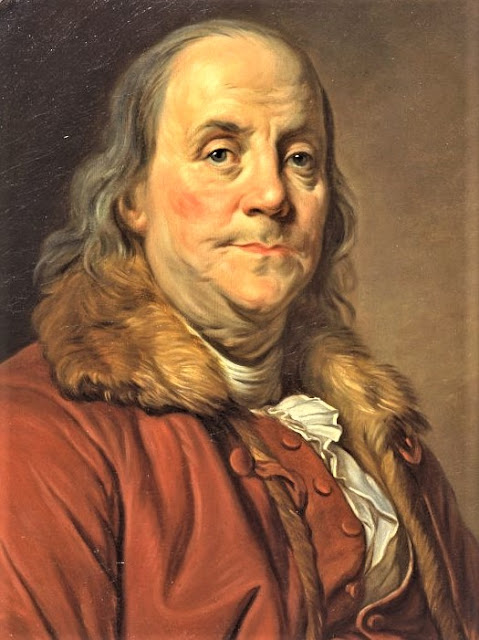
Benjamin Franklin (1706-1790) c 1779 by Joseph-Siffred Duplessis (French 1725 -1802)

Because I would have every Man make Advantage of the Blessings of Providence, and few are acquainted with the Method of making Wine of the Grapes which grow wild in our Woods, I do here present them with a few easy Directions, drawn from some Years Experience, which, if they will follow, they may furnish themselves with a wholesome sprightly Claret, which will keep for several Years, and is not inferior to that which passeth for French Claret.

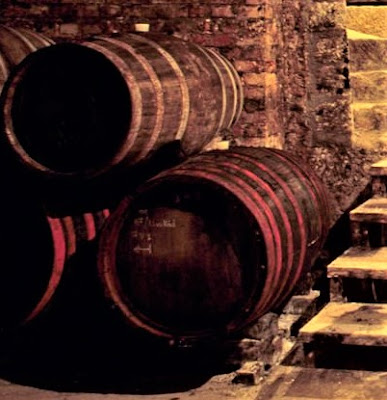
Begin to gather Grapes from the 10th of September (the ripest first) to the last of October, and having clear’d them of Spider webs, and dead Leaves, put them into a large Molosses- or Rum-Hogshead; after having washed it well, and knock’d one Head out, fix it upon the other Head, on a Stand, or Blocks in the Cellar, if you have any, if not, in the warmest Part of the House, about 2 Feet from the Ground; as the Grapes sink, put up more, for 3 or 4 Days; after which, get into the Hogshead bare-leg’d, and tread them down until the Juice works up about your Legs, which will be in less than half an Hour; then get out, and turn the Bottom ones up, and tread them again, a Quarter of an Hour; this will be sufficient to get out the good Juice; more pressing wou’d burst the unripe Fruit, and give it an ill Taste: This done, cover the Hogshead close with a thick Blanket, and if you have no Cellar, and the Weather proves Cold, with two.

In this Manner you must let it take its first Ferment, for 4 or 5 Days it will work furiously; when the Ferment abates, which you will know by its making less Noise, make a Spile-hole within six inches of the Bottom, and twice a Day draw some in a Glass. When it looks as clear as Rock-water, draw it off into a clean, rather than new Cask, proportioning it to the Contents of the Hogshead or Wine Vat; that is, if the Hogshead holds twenty Bushels of Grapes, Stems and all, the Cask must at least, hold 20 Gallons, for they will yield a Gallon per Bushel. Your Juice or Must† thus drawn from the Vat, proceed to the second Ferment.

You must reserve in Jugs or Bottles, 1 Gallon or 5 Quarts of the Must to every 20 Gallons you have to work; which you will use according to the following Directions. Place your Cask, which must be chock full, with the Bung up, and open twice every Day, Morning and Night; feed your Cask with the reserved Must; two Spoonfuls at a time will suffice, clearing the Bung after you feed it, with your Finger or a Spoon, of the Grape-Stones and other Filth which the Ferment will throw up; you must continue feeding it thus until Christmas, when you may bung it up, and it will be fit for Use or to be rack’d into clean Casks or Bottles, by February.

n.b. Gather the Grapes after the Dew is off, and in all dry Seasons.

Let not the Children come at the Must, it will scour them severely. If you make Wine for Sale, or to go beyond Sea, one quarter Part must be distill’d, and the Brandy put into the three Quarters remaining. One Bushel of Grapes, heap Measure, as you gather them from the Vine, will make at least a Gallon of Wine, if good, five Quarts.

These Directions are not design’d for those who are skill’d in making Wine, but for those who have hitherto had no Acquaintance with that Art.  Poor Richard, 1743. An Almanack For the Year of Christ 1743


“Poor Richard, 1743,” Founders Online, National Archives, https://founders.archives.gov/documents/Franklin/01-02-02-0089. [Original source: The Papers of Benjamin Franklin, vol. 2, January 1, 1735, through December 31, 1744, ed. Leonard W. Labaree. New Haven: Yale University Press, 1961, pp. 365–374.]

Poor Richard, 1743. An Almanack For the Year of Christ 1743,... By
Richard Saunders, Philom. Philadelphia: Printed and sold by B.
Franklin, at the New Printing-Office near the Market. (Yale University
Library) 

From The Papers of Benjamin Franklin, vol. 2, January 1,
1735, through December 31, 1744, ed. Leonard W. Labaree. New Haven:
Yale University Press, 1961, pp. 365–374