Sunday, September 28, 2025

Women & Gardens in Colonial Georgia 1732–1776:


1734 “Mr. Oglethorpe has laid out plots for garden cultivation near the settlement at Savannah, with figs and vines newly introduced.”  — Journal of William Stephens, 1734, in The Colonial Records of the State of Georgia, vol. 1.

1741 “The Trustees' Garden at Savannah was to be an experimental place for exotic and useful plants… there are now growing several kinds of grapes, olives, and mulberries.”  — Letter from Thomas Jones to the Trustees, 1741, cited in Coleman, Kenneth. Colonial Georgia: A History, University of Georgia Press, 1976.

1745 “A garden hath been planted with medicinal herbs under direction of Dr. William Houston... a physic garden of considerable promise.”  — Georgia Gazette, June 17, 1745.

1752 “The women here, though occupied with house and child, keep physic plants such as balm, horehound, and pennyroyal, passed down from mothers and neighbors.” — Eliza Lucas Pinckney, letter to her friend, 1752.

1736 “I walked through the gardens laid out near the fort, and was much pleased to see sage, marjoram, and southernwood cultivated with care.”  — Journal of Rev. Charles Wesley, 1736, in Wesley’s Journal.

1765 “A widow named Mrs. Delany sells saffron bulbs and wormwood tincture from her plot near the river’s edge.” — Savannah Advertiser, August 3, 1765.

1754 “Garden walls covered with creeping vines and the humbler cabbages mark the industry of women in the outlying farms.” — Johann Martin Boltzius, pastor of the Salzburgers at Ebenezer, 1754 diary entry.

Sources:

Boltzius, Johann Martin. Detailed Reports on the Salzburger Emigrants Who Settled in America. Edited by George Fenwick Jones. University of Georgia Press, 1968.

Coleman, Kenneth. Colonial Georgia: A History. University of Georgia Press, 1976.

Georgia Gazette. Historic Newspapers Archive. Savannah Advertiser. Georgia Historical Society Archives.

Pinckney, Eliza Lucas. The Letterbook of Eliza Lucas Pinckney, 1739–1762. University of South Carolina Press, 1997.

Stephens, William. The Colonial Records of the State of Georgia. Edited by Allen D. Candler, vol. 1. Franklin Printing, 1904.

Wesley, Charles. The Journal of the Reverend Charles Wesley. Epworth Press, 1909.

Wednesday, July 24, 2024

Pennsylvania Gardener Hannah Callender Sansom (1737-1801)

Hannah Callender Sansom (1737-1801)  Her son Joseph's late-18C portrait of his mother at the American Philosophical Society.

Hannah Callender Sansom was born on November 16, 1737, into a prominent Quaker family in Philadelphia, Pennsylvania.  She was the daughter of William Callender Jr. (1703–1763) and Katharine Smith (1711–1789). Growing up in a Quaker family, Hannah received an education that was advanced for women of her time, because the Quaker community believed in education for both genders.

In the city, her family lived on Front Street in Philadelphia. They divided their time between the town and their countryside plantation, Richmond Seat, which William established in Point-No-Point, about 4 miles north of Philadelphia on the banks of the Delaware River. Richmond Seat was a working plantation producing “good English hay” for sale and 35 acres of meadow with “good English grass,” an 8-acre orchard for the cultivation of various fruits, a two-acre garden, and “a small well-built brick house, with a boarded kitchen.”

In 1762, when Hannah was 25, she married Samuel Sansom Jr. (1738/39–1824), a prosperous merchant. The couple had several children, and Hannah's diaries often reflect her roles as a wife and mother, detailing the challenges and joys of managing the health and education of her growing family plus maintaining 2 households in & near 18th-century Philadelphia. 

As a member of prosperous families, Hannah had access to the collections of the Library Company of Philadelphia. Both her father and her husband, Samuel Sansom Jr. were members with access to the institution's collection of architectural, gardening, and horticultural manuals. 

Hannah's diary contains descriptions of several country houses built along the banks of the Schuylkill River. Some of her recorded visits occur on trips away from Philadelphia.

In September of 1758, Hannah Callender Sansom visited Bush Hill, estate of James Hamilton, near Philadelphia, & wrote in her diary, “a party to bush hill...in the afternoon, a fine house and gardens, with Statues, and fine paintings."

Hannah's June of 1759, diary entry focusd on Bayard’s country seat, near New York, NY “took a walk to - Boyard’s Country seat, who was so complaisent as to ask us in his garden. the front of the house, faces the great road, about a quarter of a mile distance, a fine walk of locas trees now in full blossom perfumes the air, a beautiful wood off one side, and a Garden for both use and ornament on the other side from which you see the City at a great distance. good out houses at the back part. they have no gardens in or about New York that come up to ours of philadelphia.” On tis trip to New York, Hannah wrote of  “...a good many pretty Country seats, In particular Murreys, a fine brick house, and the whole plantation in good order, we rode under the finest row of Button Wood I ever see.”

Hannah's August 1, 1759, diary entry describing Richmond Seat, summer retreat of William Callender Jr. on the Delaware River in Point-No-Point near Philadelphia, "Daddy and I went to Plantation...the place looks beautiful. the plat belonging to Daddy is 60 acres square: 30 of upland, 30 of meadow, which runs along the side of the river Delawar, half the uplands is a fine Woods, the other Orchard and Gardens, a little house in the midst of the Gardens, interspersed with fruit trees. the main Garden lies along the meadow, by 3 descents of Grass steps, you are led to the bottom, in a walk length way of the Garden, on one Side a fine cut hedge incloses from the meadow, the other, a high Green bank shaded with Spruce, the meadows and river lying open to the eye, looking to the house, covered with trees, honey scycle vines on the fences, low hedges to part the flower and kitchen Garden, a fine barn. Just at the side of the Wood, the trees a small space round it cleared from brush underneath, the whole a little romantic rural scene.”

Hannah's August 30, 1761, visit to the Moravian settlement at Bethlehem, “Sister Garrison with good humour gave us girls leave, to step cross a field to a little Island belonging to the Single Bretheren, on it is a neat Summer house, with seats of turf, and button wood Trees round it.”

Hannah's June 28, 1762, visit to the estate of the late Tench Francis Sr. near Philadelphia, “walked agreeably down to Skylkill along its banks adorned with Native beauty, interspersed by little dwelling houses at the feet of hills covered by trees, that you seem to look for enchantment they appear so suddenly before your eyes, on the entrance you find nothing but mere mortality, a spinning wheel, an earthen cup, a broken dish, a calabash and wooden platter: ascending a high Hill into the road by Robin Hood dell went to the Widow Frances’s place, she was there and behaved kindly, the House stands fine and high, the back is adorned by a fine prospect, Peter’s House, Smiths Octagon, Bayntons House &c and a genteel garden, with serpentine walks and low hedges, at the foot of the garden you desend by sclopes to a Lawn. in the middle stands a summer House, Honey Scykle &c, then you desend by Sclopes to the edge of the hill which Terminates by a fense, for security, being high & almost perpendicular except the craggs of rocks, and shrubs of trees, that diversify the Scene.”

Hannah's June 30, 1762, visit to Belmont, estate of William Peters, near Philadelphia, “went to Will: Peters’s house, having some small aquaintance with his wife who was at home with her Daughter Polly. they received us kindly in one wing of the House, after a while we passed thro' a covered Passage to the large hall...from the Front of this hall you have a prospect bounded by the Jerseys, like a blueridge, and the Horison, a broad walk of english Cherre trys leads down to the river, the doors of the house opening opposite admit a prospect of the length of the garden thro' a broad gravel walk, to a large hansome summer house in a grean, from these Windows down a Wisto terminated by an Obelisk, on the right you enter a Labarynth of hedge and low ceder with spruce, in the middle stands a Statue of Apollo, in the garden are the Statues of Dianna, Fame & Mercury, with urns. we left the garden for a wood cut into Visto’s, in the midst a chinese temple, for a summer house, one avenue gives a fine prospect of the City, with a Spy glass you discern the houses distinct, Hospital, & another looks to the Oblisk.” 

Hannah's July 27, 1768, visit to the estate of Joshua Howell, near Philadelphia, “went to Edgeley. Joshua Howel has a fine Iregular Garden there, walked down to Shoolkill, after dinner...walked to the Summer House, in view of Skylkill where Benny [Shoemaker] Played on the flute.”

Hannah's May 14, 1785, visit to Bush Hill, estate of James Hamilton, near Philadelphia, “to Hambleton’s Bush hill estate, walked over that good house, viewed the fine stucco work, and delightful prospects round...”

Hannah's, June 20, 1785, visit to Belmont, estate of Richard Peters, near Philadelphia, “crossed Brittains bridge, to John Penns elegant Villa...mounted our chaise and rode a long the Schuilkill to Peters place the highest and finist situation I know, its gardens and walks are in the King William taste, but are very pleasant...”

Her diaries reveal her knowledge of the medicinal properties of various plants. She often wrote about creating herbal concoctions and treatments, blending her gardening skills with practical applications for her family's health. This aspect of her writing highlights the important role that medicinal plants and gardens played in the daily lives of women at that time.

Hannah Callender Sansom passed away on March 9, 1801. Her diaries remain an invaluable historical resource, offering a window into the massive responsibilities of a wife & mother & of her plants revealing her contributions to horticulture and botany.

Bibliography

Books:

Bloch, Ruth H. Gender and Morality in Anglo-American Culture, 1650–1800. University of California Press, Berkeley, 2003.

Frost, J. William. The Quaker Family in Colonial America: A Portrait of the Society of Friends. St. Martin's Press, New York, 1973.

Gaddis, John Lewis. The Landscape of History: How Historians Map the Past. Oxford University Press, New York, 2002.

Illick, Joseph E. Colonial Pennsylvania: A History. Scribner, New York, 1976.

Klepp, Susan E., and Karin Wulf, eds. Diary of Hannah Callender Sansom: Sense and Sensibility in the Age of the American Revolution. Cornell University Press, Ithaca, 2010.

Lewis, Jane. Women in Colonial America: A Study of Hannah Callender Sansom. Harvard University Press, Cambridge, 1995.

Mack, Phyllis. Quaker Women, 1650-1690. Indiana University Press, Bloomington, 1995.

Richards, Thomas. Faith and Practice: The Role of Quaker Women in Colonial Society. Yale University Press, New Haven, 1987.

Thompson, Samuel. The Quaker Influence on American Colonial Culture. Princeton University Press, Princeton, 1998.

Articles:

Adams, Margaret. "The Social Networks of Hannah Callender Sansom: A Quaker Woman's Perspective." Journal of Social History, vol. 40, no. 2, Winter 2006, pp. 391-410.

Brown, Ellen. "Daily Life and Domestic Duties in the 18th Century: Insights from Hannah Callender Sansom." Early American Studies, vol. 5, no. 3, Fall 2007, pp. 225-240.

Johnson, Mark. "A Quaker Woman's World: The Diaries of Hannah Callender Sansom." Pennsylvania Magazine of History and Biography, vol. 134, no. 4, October 2010, pp. 351-370.

Smith, Laura. "Gardening in the Eighteenth Century: The Diaries of Hannah Callender Sansom." Journal of Early American Gardens, vol. 6, no. 2, 2015, pp. 45-60.

Turner, Alice. "Hannah Callender Sansom and Her Philadelphia Garden." American Horticultural Society Journal, Summer 2011, pp. 24-35.

Williams, Joan. "Quaker Perspectives on Family and Gender Roles: The Writings of Hannah Callender Sansom." Quaker History, vol. 90, no. 1, Spring 2001, pp. 19-33.

Monday, April 8, 2024

South Carolina Landscape - 1743 "Meeting House" in Prince William's Parish

Charles Fraser (1782-1860) Meeting House in Prince William's Parish

The Stony Creek Presbyterian Church built in Indian Land on Stony Creek near Pocotaligo in 1743. Fraser notes in his Reminiscences, even during his boyhood, the Presbyterian "dissenters" never called their places of worship churches!

Kimberly Pyszka tells us that in 1706, the Church of England became the established church of South Carolina. Construction of several churches began shortly thereafter under the supervision of local parish supervisors. Archaeological testing at the 1707 St. Paul's Parish Church indicates parish supervisors purposely altered the church's orientation from the traditional east—west orientation in order to make it more of a presence on the landscape. A subsequent regional landscape study of other early-18th-century South Carolina Anglican churches suggests that throughout the colony church supervisors strategically placed churches on the landscape to be material expressions of the Anglican Church's presence and power in the culturally and ethnically divided colony. As a consequence of the intentional placement of churches on the landscape, the South Carolina Anglican Church played a larger role in the development of the colony by affecting the expansion of transportation networks and, later, settlement patterns.  See: Pyszka, Kimberly. ""Built for the Publick Worship of God, According to the Church of England": Anglican Landscapes and Colonialism in South Carolina." Historical Archaeology 47, no. 4 (2013): 1-22.

To read more about South Carolina churches & their landscapes, see:

Bolton, Charles S. 1982 Southern Anglicanism: The Church of England in Colonial South Carolina. Greenwood Press, Westport, CT.

Brinsfœld, John Wesley 1983 Religion and Politics in Colonial South Carolina. Southern Historical Press, Easley, SC.

Crass, David, Steven Smith, Martha Zierden, and Richard Brooks 1998 Introduction. In The Southern Colonial Backcountry: Interdisciplinary Perspectives on Frontier Communities, David Crass, Steven Smith, Martha Zierden, and Richard Brooks, editors, pp. 1-35. University of Tennessee Press, Knoxville.

Dalcho, Frederick 1820 An Historical Account of the Protestant Episcopal Church in South Carolina. E. Thayer, Charleston, SC.

Kryder-Reid, Elizabeth 1994 As Is the Gardener, So Is the Garden: The Archaeology of Landscape as Myth. In Historical Archaeology of the Chesapeake, Paul Shackel and Barbara Little, editors, pp. 131-148. Smithsonian Institution Press, Washington, DC.

Kryder-Reid, Elizabeth 1996 The Construction of Sanctity : Landscape and Ritual in a Religious Community. In Landscape Archaeology: Reading and Interpreting the American Historical Landscape, Rebecca Yamin and Karen Bescherer Metheny, editors, pp. 228-248. University ofTennessee Press, Knoxville.

Lewis, Kenneth E. 2006 Camden: Historical Archaeology in the South Carolina Backcountry. Thomson Wadsworth, Belmont, CA.

Linder, Suzanne Cameron 2000 Anglican Churches in Colonial South Carolina: Their History and Architecture. Wyrick and Company, Charleston, SC.

Nelson, Louis P. 2001 The Material Word: Anglican Visual Culture in Colonial South Carolina. Doctoral dissertation, Department of Art History, University of Delaware. University Microfilms International, Ann Arbor, MI.

Nelson, Louis P. 2008 The Beauty of Holiness: Anglicanism and Architecture in Colonial South Carolina. University of North Carolina Press, Chapel Hill.

Pyszka, Kimberly 2012 "Unto Seytne Paules": Anglican Landscapes and Colonialism in South Carolina. Doctoral dissertation, Department of Anthropology, University ofTennessee, Knoxville. University Microfilms International, Ann Arbor, MI.

Pyszka, Kimberly, Maureen Hays, and Scott Harris 2010 The Archaeology of St Paul's Parish Church, Hollywood, South Carolina, USA. Journal of Church Archaeology 12:71-78.

South, Stanley, and Michael Hartley 1980 Deep Water and High Ground: Seventeenth Century Lowcountry Settlement. Institute of Archaeology/ Anthropology, University of South Carolina, Research Manuscript Series 166. Columbia.

Young, Amy L. 2000 Introduction: Urban Archaeology in the South. In Archaeology of Southern Urban Landscapes, Amy L. Young, editor, pp. 1-13. University of Alabama Press, Tuscaloosa.

Zierden, Martha, and Linda S tine 1 997 Introduction: Historical Landscapes through the Prism of Archaeology. In Carolina s Historical Landscape: Archaeological Perspectives, Linda F. Stine, Martha Zierden, Lesley M. Drucker, and Christopher Judge, editors, pp. xi-xvi. University of Tennessee Press, Knoxville.

Saturday, February 26, 2022

From Garden to Table - Benjamin Franklin & Cranberries

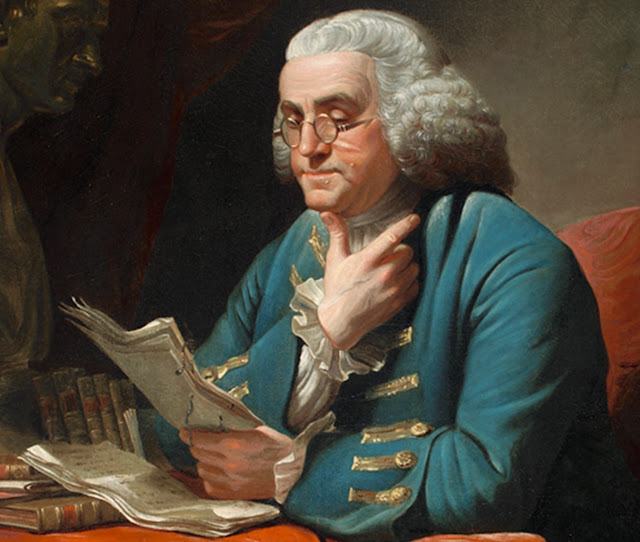
 Benjamin Franklin by David Martin (1736-1798)

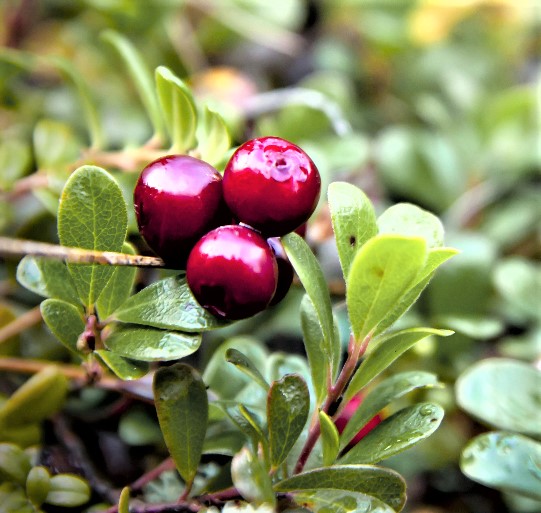
Cranberries were native & growing in North America as Europeans began to explore the continent in the 16C.  French explorer of Acadia (Maine & the Maritimes in Canada) Marc Lescarbot (c. 1570-1641) observed natives eating cranberry sauce with meats in the early 17C. He also came to the conclusion that cranberry jelly was excellent for dessert. "Everywhere there is life...wherever there is crack or cranny soil can gather in, with partridge-berry, blueberry, & mountain cranberry; penetrating the forest shade & profiting by the dense northern covering of leafy humus that it finds there..." Marc Lescarbot. Histoire de Nouvelle-France, 1609.  

Long before colonists landed on the shores of New England, Native Americans harvested cranberries from peaty bogs & marshes. The Aquinnah Wampanoags still celebrate their most important holiday, Cranberry Day, on the 2nd Tuesday of October. Called sasemineash by the Narragansett and sassamenesh by the Algonquin & Wampanoag tribes, the tart berries were an important food source, as European colonists came to discover. "We proceeded to Cranberry Lake, so called from the great quantities of cranberries growing in the swamps … this was one inducement for settling here which was increased by the prospect of a plentiful supply of fish, rice and cranberries …" John Long in Voyages and Travels of an Indian Interpreter and Trader (London:1791) 

Cranberries were among the favorite native American garden, farm, & bog foods enjoyed by Benjamin Franklin (1706-1790), author, publisher, scientist, inventor & diplomat. Franklin had his wife Deborah & their daughter, who remained in the British American colonies as he traveled across the Atlantic, ship him barrels of cranberries both to England & later to France.  

Food historian Rae Katherine Eighmey writes of the nearly 2 decades Benjamin Franklin spent in London before the American Revolution. There he rented rooms from widow Mrs. Margaret Stevenson & her daughter Polly. They grew close to Franklin's wife Deborah & daughter Sally back home in Philadelphia. Goods were shipped back & forth across the Atlantic. Deborah sent her husband & the Stevensons Philadelphia biscuits, & barrels of apples & cranberries. The Stevenson's had never before tasted cranberries or experienced the tart richness of this native American fruit.

As agent for the British American colony of Pennsylvania, Franklin lobbied for colonial interests during his long London stay,  He met with politicians, scientists & philosophers with whom he had corresponded for years. He spent many evenings at social & scientific gatherings & dinners. His correspondence gives a glimpse of his affection for (or obsession with) America's cranberries.


I have no Prospect of Returning till next Spring, so you will not expect me. But pray remember to make me as happy as you can, by sending some Pippins for my self and Friends, some of your small Hams, and some Cranberries. From Benjamin Franklin to Deborah Franklin, 10 June 1758. American Philosophical Society

I never receiv’d any Cranberry’s from Boston. From Benjamin Franklin to Deborah Franklin, [c. 7 April 1759] American Philosophical Society

I received your kind Letter per Capt. Story, of Nov. 19, and a subsequent one per Capt. Falkner without date. I have received also the Indian and Buckwheat Meal that they brought from you, with the Apples, Cranberries and Nuts, for all which I thank you. From Benjamin Franklin to Deborah Franklin, 13 February 1768 American Philosophical Society


Thanks for the Cranberrys. I am as ever Your affectionate Husband B Franklin (Benjamin Franklin to wife Deborah, November 1770)

Franklin's Cash Accounts record that he purchased Fish and Cranberries from a "New Engld Vessell" in December of 1772, presumably for holiday entertaining. From The Papers of George Washington, Colonial Series, vol. 9, 8 January 1772 – 18 March 1774, ed. W. W. Abbot and Dorothy Twohig. Charlottesville: University Press of Virginia, 1994,

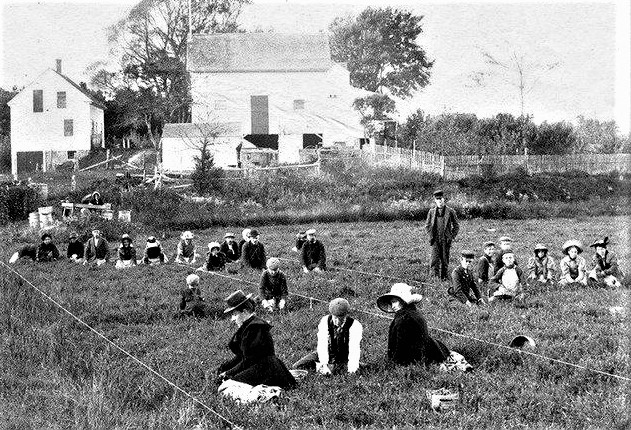
19C Picking Cranberries in Massachusetts

Capts. All, Osborne, and Sparkes, are arrived; and a Barrel of Apples with another of Cranberries are come, I know not yet by which of them. p.s. Have just opened the Apples and Cranberries, which I find in good order, all sound. Thanks for your kind Care in sending them.  Mrs Franklin From Benjamin Franklin to wife Deborah Franklin, 1 December 1772

I am much oblig’d by your ready Care in sending them, and thank you for the Cranberries, Meal, and dry’d Apples. The latter are the best I ever saw. Benjamin Franklin in London to William Franklin, 14 February 1773 from a Letterbook draft at the Library of Congress

Perhaps Franklin had learned to make his own favorite delicacy in all those years away from home.  I have lately received some Cranberrys from Boston … I will pick out enough to make you a few Cranberry Tarts”  (friend Jonathan Williams, Jr. to Benjamin Franklin, March 9, 1782.  

 Massachusetts Cranberry Bog
See:
The Unbound Blog of The Smithsonian Libraries & Archives, "Native Fruit: Cranberry for all Seasons" by Julia Blakely November 4, 2017

Rae Katherine Eighmey. Stirring the Pot with Benjamin Franklin: A Founding Father's Culinary Adventures. Smithsonian Institution Press. 2018.

Monday, February 21, 2022

South Carolina Landscape - A 1728 "Meetinghouse" near Jacksonborough in 1799.

Charles Fraser (1782-1860) A "Meetinghouse" near Jacksonborough in 1799.

"This is the meeting-house of Bethel Congregation of Pon Pon organized in St. Bartholomew’s Parish in 1728 and first ministered to by the Reverend Archibald Stobo, the Father of Presbyterianism in South Carolina. One historian told of Reverend Robert Baron, sent out to St. Bartholomew’s Parish by the Society for the Propagation of the gospel in 1753: “He arrived at Charles Town June 1st and entered on the duties of his cure on the 7th of that month. Mr. Baron was soon after taken ill, and had a severe seasoning, as it is usually called. His Parishioners were scattered over a great extent of country, and were an orderly and well behaved people. The Presbyterians were numerous, but they all lived together in mutual friendship and Christian charity.” 

Fraser notes in his Reminiscences, even during his boyhood, the Presbyterian "dissenters" never called their places of worship churches!